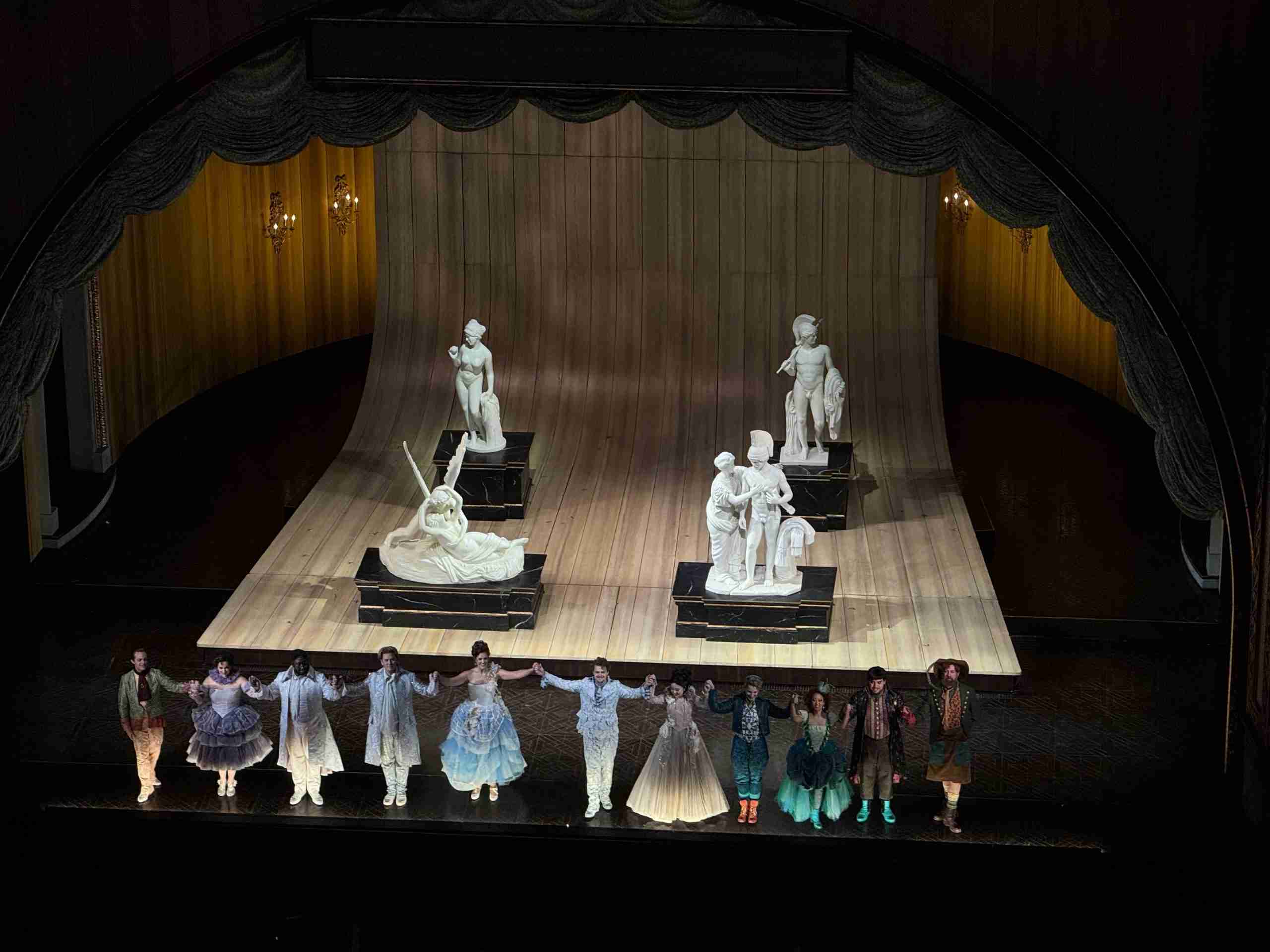
On November 24, 2024, I attended the Lyric Opera of Chicago’s production of Mozart’s Le nozze di Figaro. Director Barbara Gaines opted for a lavish, breathtakingly classical staging that focused on the raw depth of human nature, jealousy, and the resilience of friendship hidden within the comedy. What immediately captured the eye—and anchored the entire aesthetic—was the visual opulence of Count Almaviva’s estate, beautifully reflected in the design of the company’s program book.
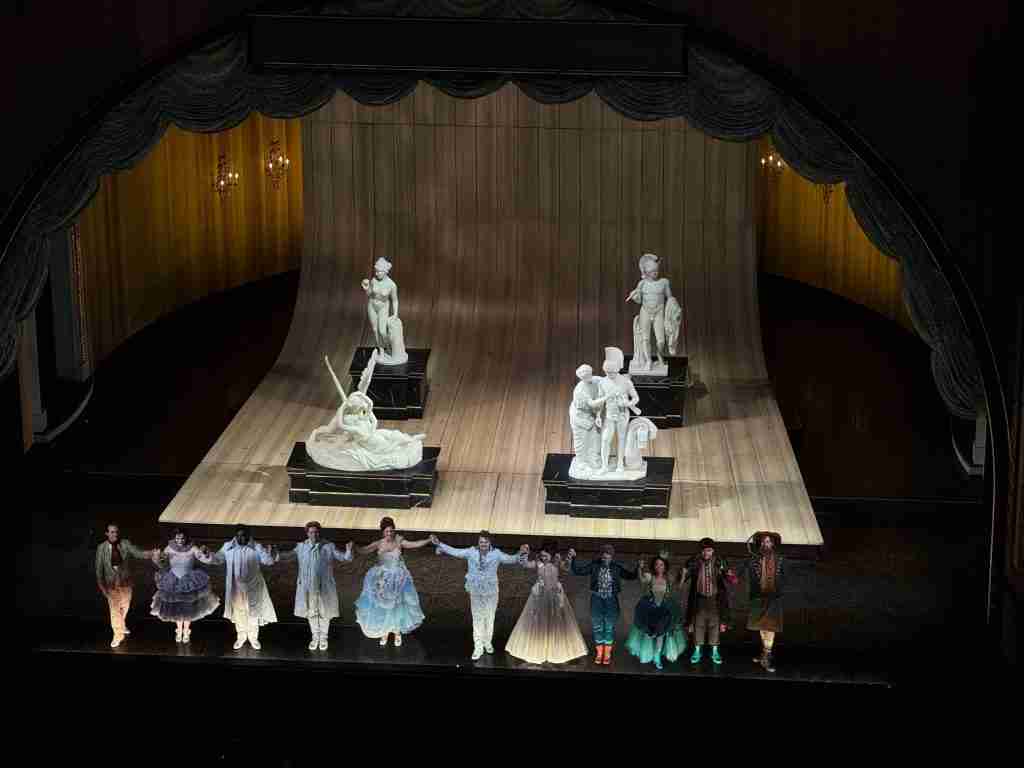


The Motif of Chandeliers and Statues
Designed by James Noone, the stage was a striking vision of aristocratic luxury, dominated by towering classical columns, elegant statues, and massive, glittering crystal chandeliers. These chandeliers were more than merely decorative; they served as a brilliant theatrical foil. By hanging such immaculate, rigid, and imposing symbols of wealth and power over the stage, the production highlighted the “golden cage” navigated by the Countess and Susanna. The opera’s comedy emerged from this contrast: watching chaotic, subversive human behavior upend a world that appeared pristine and immovable from the outside.
Gaines further emphasized this theme by placing statues in the Act IV garden that represented lovers who had traversed the same emotional journeys as the characters—a reminder that beneath the formal period costumes, the emotional stakes remain timeless and real.
An Elite Musical Summit
This traditional framework allowed a spectacular cast of globally prominent Mozartians to shine. The production was anchored by the highly anticipated Lyric debut of Italian soprano Federica Lombardi, who delivered a heartbreakingly poignant Countess. She was paired with the radiant, quick-witted Susanna of soprano Ying Fang. Together, their performance of the famous Act III letter duet (“Sull’aria”) became the emotional heart of the evening—a masterclass in musical reciprocity and genuine female solidarity that transcended the aristocratic stiffness of the Count’s palace.
Under the precise and dynamic baton of conductor Erina Yashima, the Lyric Opera Orchestra delivered a performance that felt both lightning-fast and deeply moving. Ultimately, Lyric Opera’s staging proved that with towering crystal chandeliers, world-class voices, and a deep respect for the human condition, Mozart’s masterwork requires no modernization to leave a lasting impression.