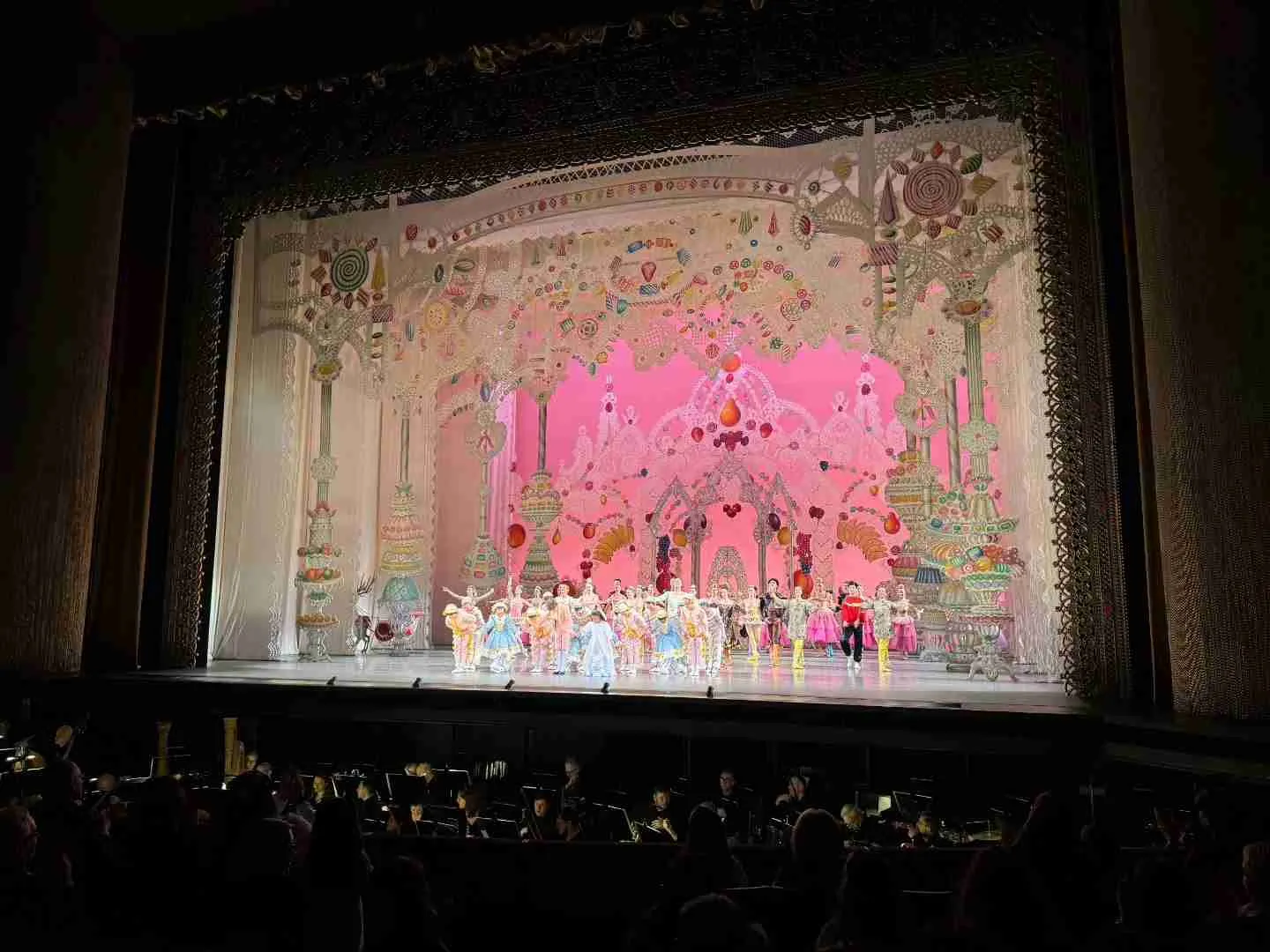
George Balanchine’s The Nutcracker at the New York City Ballet features a massive production team of dancers, musicians, and stagehands. The performance utilizes Tchaikovsky’s score and elaborate stagecraft, including a signature one-ton Christmas tree that expands during the show and intricate costumes like the nine-foot-wide Mother Ginger.
The ballet follows the story of Marie and Fritz as they journey from a holiday party into a fantasy realm. Choreography guides the transition from the reality of the Stahlbaum home to the Kingdom of the Sugarplum Fairy, blending technical stage effects with classical dance across two distinct acts.
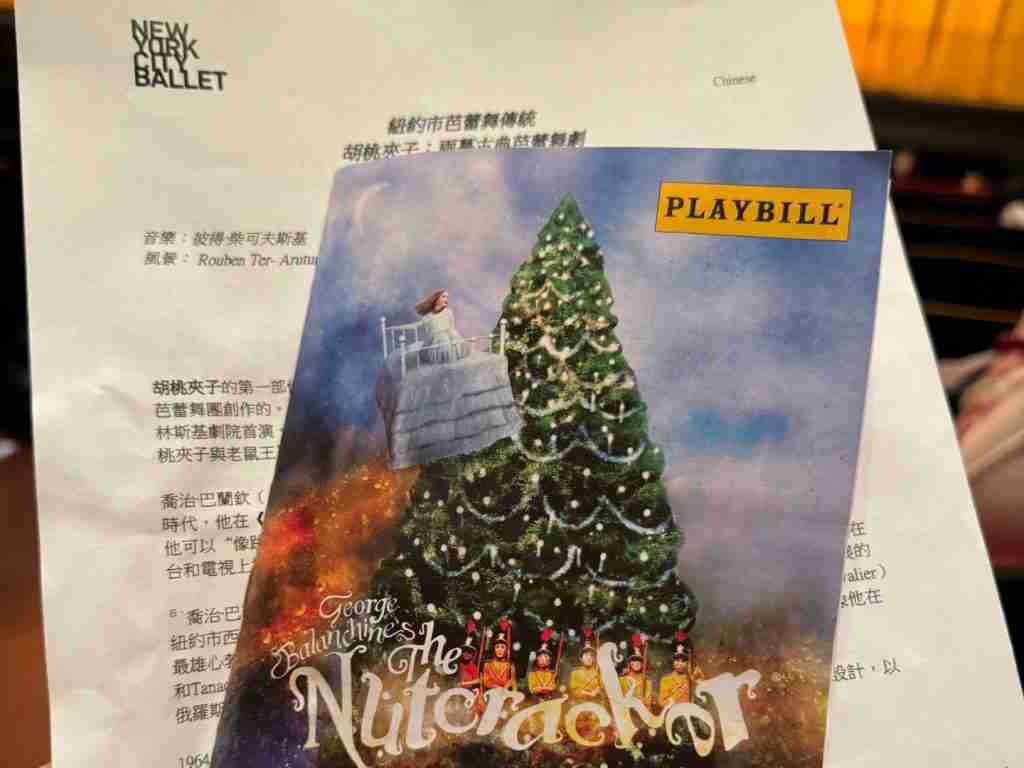
On November 26, 2023, I attended the New York City Ballet’s performance of George Balanchine’s *The Nutcracker®*, one of the most complex and storied productions in the company’s active repertory. Immensely popular, this ballet provides a magical spark to the holiday season. To bring each performance to life, a dedicated team of 90 dancers, 62 musicians, 40 stagehands, and more than 125 children from the School of American Ballet (performing in two alternating casts) join forces to ensure an unforgettable experience.
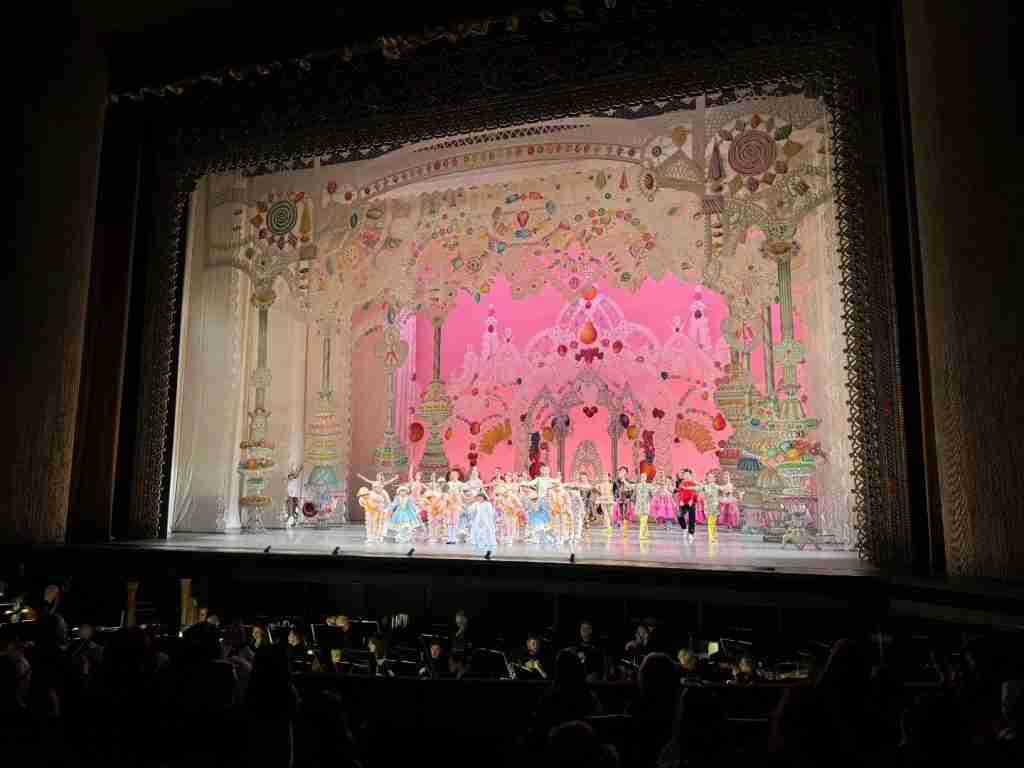

Audiences from New York City and around the world fill the David H. Koch Theater, captivated by Tchaikovsky’s iconic score, Balanchine’s masterful choreography, Karinska’s sumptuous costumes, and Rouben Ter-Arutunian’s enchanting sets. Based on the Alexandre Dumas père version of E.T.A. Hoffmann’s 1816 tale, *The Nutcracker and the Mouse King*, Balanchine’s production is a grand, full-scale masterpiece.
The production’s elaborate stage elements and intricate lighting design unleash the imagination with extraordinary visual effects. Most notably, the legendary one-ton Christmas tree grows from 12 feet to an astonishing 41 feet, drawing audible gasps of disbelief from the audience. Other remarkable feats include the nine-foot-wide, 85-pound costume of Mother Ginger—which requires three handlers to lower it by pulley over the dancer’s head—and the continuous flutter of crystal-shaped snowflakes, which are meticulously swept up and conserved for reuse after every performance.
While these technical achievements are a marvel to behold, it is Balanchine’s choreography that sustains the ballet across its two acts. Act I introduces the Stahlbaum children, Marie and Fritz, alongside Herr Drosselmeier and his Nephew, as the story transitions from reality into fantasy with the “Waltz of the Snowflakes.” Act II completes this transformation, leading the audience into the “Kingdom of the Sugarplum Fairy,” where the magic truly takes hold.